 admin
admin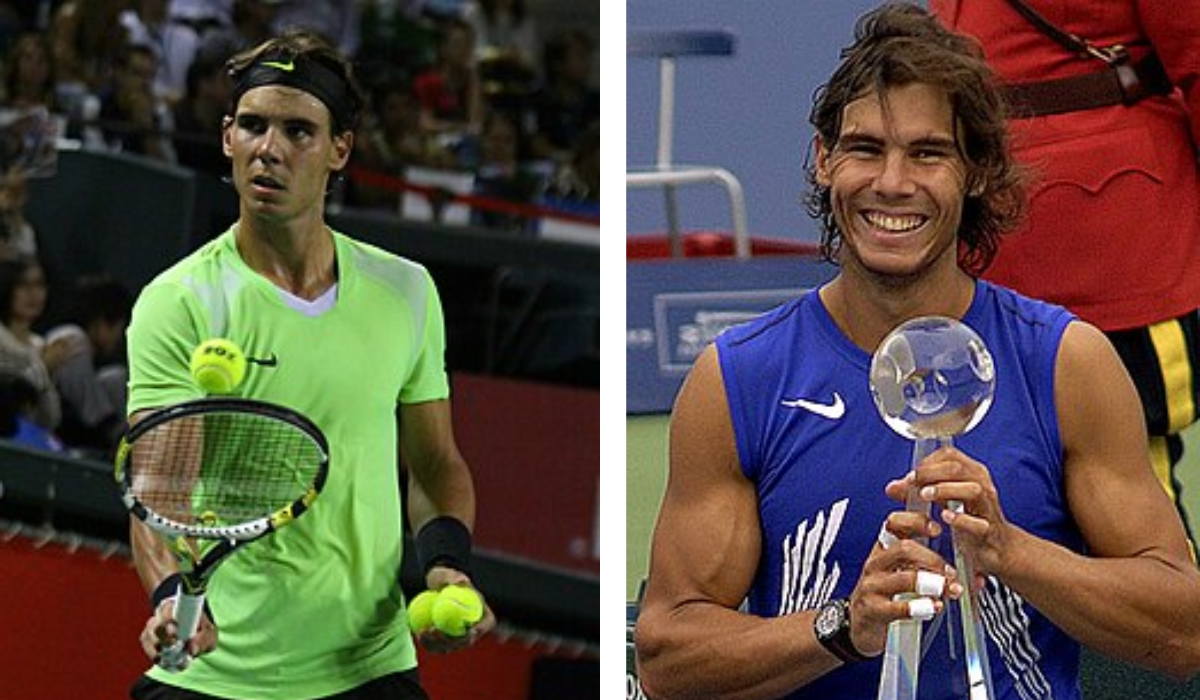
Rafael Nadal remains one of the most recognized names in modern tennis, remembered for extraordinary consistency, relentless competition, and historic success across three decades. Born in Manacor, Mallorca, Spain, he developed into a left-handed champion whose career included 22 Grand Slam singles titles, 92 tour-level titles, two Olympic gold medals, and 209 weeks as world No. 1. His professional career officially ended after the 2024 Davis Cup Finals. Even after retirement, his records, academy, charitable work, and influence continue to keep his name central to conversations about tennis history.
Quick Bio Table
| Detail | Information |
|---|---|
| Full Name | Rafael Nadal Parera |
| Born | June 3, 1986 |
| Birthplace | Manacor, Mallorca, Spain |
| Nationality | Spanish |
| Profession | Former professional tennis player |
| Playing Hand | Left-handed |
| Grand Slam Titles | 22 |
| Olympic Gold Medals | 2 |
| Tour-Level Titles | 92 |
| World No. 1 | 209 weeks |
| Turned Professional | 2001 |
| Retired | 2024 |
Early Life in Mallorca
Rafael Nadal was born on June 3, 1986, in Manacor, a town on the Spanish island of Mallorca. He grew up in a sporting family and began playing tennis at a young age. His uncle Toni Nadal became an important early coach and helped shape his competitive habits. Nadal also played football during childhood, but tennis eventually became his main path. The combination of family guidance, disciplined training, and natural athletic ability helped him develop quickly. By his teenage years, he was already attracting attention as one of Spain’s most promising young tennis players.
Junior Development and Breakthrough
Nadal turned professional in 2001 and quickly began establishing himself on the ATP Tour. His breakthrough accelerated in 2003, when he reached the third round at Wimbledon at age 17. That performance showed that his game could compete against established professionals. In 2004, he won his first ATP title in Sopot, Poland, on clay. His aggressive movement, heavy topspin, powerful forehand, and determination made him increasingly difficult to defeat. These early results laid the foundation for a career that would soon become one of the most successful in tennis history.
First Roland Garros Triumph
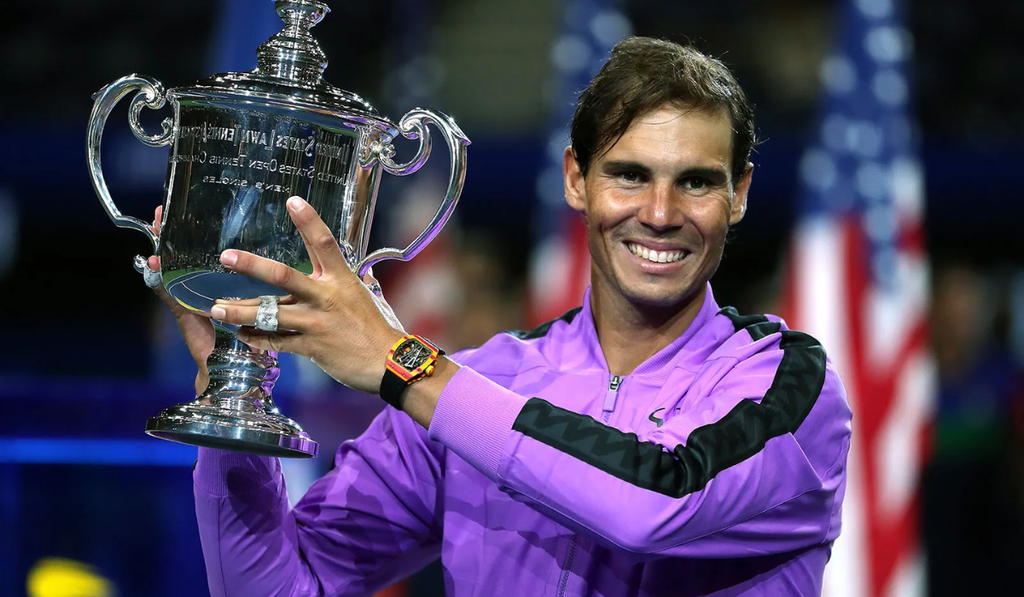
Nadal announced himself as a Grand Slam champion at Roland Garros in 2005. At only 19, he won the Paris tournament on his debut appearance and immediately became one of the sport’s leading young stars. His clay-court movement and heavy forehand were particularly effective on the slow surface. The victory was more than a single title because it began a remarkable relationship with the French major. Over the following years, Nadal repeatedly returned to Paris with enormous expectations and continued to produce performances that established his reputation as an exceptional clay-court competitor.
Grand Slam Career
Nadal finished his career with 22 Grand Slam singles championships: two Australian Open titles, 14 Roland Garros titles, two Wimbledon titles, and four US Open titles. ATP Tour records credit him with 314 Grand Slam match wins. His 14 French Open championships are a record at a single Grand Slam tournament. He also won at least one major title in ten consecutive years from 2005 through 2014. These achievements demonstrate not only his peak level but also his ability to remain competitive through changing generations, surfaces, opponents, and physical challenges.
Australian Open Success
Nadal won the Australian Open twice, in 2009 and 2022. His first title in Melbourne came after a five-set final against Roger Federer, while his second arrived after a remarkable comeback against Daniil Medvedev. In 2022, he recovered from two sets down and won after more than five hours on court. That comeback moved him to 21 Grand Slam titles at the time and became one of the defining moments of his later career. His Australian Open record also reflects his ability to compete successfully on hard courts despite his strongest historical association with clay.
Wimbledon Achievements
Nadal won Wimbledon in 2008 and 2010, proving that his success was not limited to clay. His 2008 final against Federer is widely remembered as one of the most dramatic matches in Wimbledon history. Nadal won the contest in five sets after a long rain-affected battle. In 2010, he returned to the final and defeated Tomas Berdych to claim his second championship. His ability to adapt his movement, serve, return, and baseline patterns to grass helped demonstrate the broader range of his tennis. He also reached three additional Wimbledon finals.
US Open Championships
Nadal captured four US Open titles, winning in 2010, 2013, 2017, and 2019. Rafael Nadal first New York championship completed his career Grand Slam at age 24. The 2010 victory was especially significant because he had already won Roland Garros and Wimbledon earlier that season. His later titles showed that his hard-court game continued evolving. Improved serving, aggressive court positioning, and physical resilience helped him succeed in New York. Across his career, he developed into a major threat on every surface rather than remaining only a specialist associated with clay.
The Clay-Court Record
Nadal built the most extraordinary clay-court record of the Open Era. ATP Tour records list 63 of his 92 tour-level titles as coming on clay, along with a 484-51 overall record on the surface. He won Roland Garros 14 times and also collected 11 Monte-Carlo Masters titles, 10 Rome titles, and 12 Barcelona titles. Rafael Nadal dominance included an 81-match clay-court winning streak from 2005 to 2007. These numbers explain why his name became closely connected with clay-court excellence and why his Paris record is considered one of tennis’s most difficult achievements to match.
Rivalry With Roger Federer
Rafael Nadal and Roger Federer formed one of tennis’s defining rivalries. Their contrasting styles created memorable matches on clay, grass, and hard courts. Nadal generally relied on heavy topspin, physical defense, and powerful forehand patterns, while Federer used compact attacking tennis, variety, and exceptional timing. Their rivalry included major finals at Wimbledon, the Australian Open, and Roland Garros. Beyond the statistics, their competitive relationship helped define an era in which both players consistently challenged each other at the biggest tournaments. Their matches also contributed to tennis reaching broader global audiences during the 2000s and 2010s.
Rivalry With Novak Djokovic
Rafael Nadal and Novak Djokovic also developed one of the longest and most important rivalries in professional tennis. They met repeatedly across Grand Slam tournaments, Masters events, and other major competitions. Their contrasting physical and tactical strengths produced many lengthy encounters, including major finals and semifinals. Djokovic’s exceptional return game and flexible defense frequently challenged Nadal’s heavy baseline patterns. Nadal, in turn, used left-handed serving angles and his forehand to create difficult matchups. Their rivalry became a major part of the era often described as the Big Three, alongside Federer.
The Big Three Era
Rafael Nadal shared an extraordinary competitive period with Federer and Djokovic, with the three players winning a large share of men’s Grand Slam titles across their careers. Their longevity meant that younger generations often had to defeat one of the established champions to win major tournaments. The era also raised expectations for physical preparation, consistency, recovery, and tactical adaptation. Nadal’s particular contribution was his ability to transform clay-court mastery into a career that included major success on grass and hard courts. Rafael Nadal achievements helped make the Big Three period one of the defining chapters of modern men’s tennis.
World No. 1 Ranking
Rafael Nadal reached world No. 1 for the first time on August 18, 2008. ATP Tour records show that he spent 209 weeks at the top of the rankings and held the position across multiple periods. He also remained inside the Top 10 for 912 consecutive weeks, from April 2005 until March 2023. This consistency is notable because professional tennis rankings reward results over time rather than a single tournament. Nadal’s long presence near the top reflected his ability to accumulate deep tournament runs and major titles despite periods when injuries limited his schedule.
Olympic Gold Medals
Nadal won two Olympic gold medals during his career. He captured the men’s singles title at the 2008 Beijing Olympics and later won the men’s doubles gold medal at the 2016 Rio Olympics with Marc López. His Beijing victory was another milestone because it came during the same period in which he first reached world No. 1. The doubles triumph in Rio added a second Olympic championship and strengthened his record as a player who succeeded in both individual and team-oriented formats. He also represented Spain extensively in Davis Cup competition.
Davis Cup and Spain
Rafael Nadal played an important role for Spain in Davis Cup competition throughout his career. He helped Spain win multiple Davis Cup titles and often represented the country despite a demanding individual schedule. The 2004 Davis Cup final in Seville was one of his early major national-team moments. Rafael Nadal final professional event was the 2024 Davis Cup Finals in Malaga, bringing his career to a symbolic close while representing Spain. ATP Tour reported that Nadal described the Davis Cup as an especially meaningful part of his career because it connected his beginning as a professional with his farewell.
Injuries and Comebacks
Rafael Nadal faced repeated injuries involving his knees, wrists, foot, abdomen, and other areas during his career. These interruptions sometimes kept him away from major tournaments and reduced his competitive schedule. Despite those setbacks, he repeatedly returned to elite competition. Rafael Nadal 2013 comeback after injury was particularly notable, as he won major titles and returned to world No. 1 later in his career. The 2022 Australian Open comeback also showed his capacity to compete after serious physical difficulties. His career therefore included not only championships but also repeated periods of rehabilitation, adaptation, and return.
Retirement in 2024
Rafael Nadal announced his retirement from professional tennis in October 2024, saying the Davis Cup Finals in Malaga would be his final event. He finished with 92 tour-level titles and 22 Grand Slam championships. Nadal explained that the physical limitations of recent seasons had made the decision difficult and that he believed the time was appropriate to end his professional career. His final competitive appearance came against the Netherlands in the Davis Cup quarterfinal stage. Although his professional career ended, his records and influence remained part of the sport’s ongoing history.
Family and Personal Life
Rafael Nadal married Maria Francisca Perello in 2019 after a long relationship. The couple have a son, and family life became increasingly important to Nadal during the later stages of his playing career. He has generally kept his private life away from excessive public attention. His parents, family members, and uncle Toni played important roles during his development. Nadal has often spoken about the value of family support and the importance of maintaining perspective beyond sport. His personal background helps explain the strong connection he has maintained with Mallorca and Spain throughout his public life.
Nadal Academy
Nadal established the Rafa Nadal Academy in Mallorca as a training and education environment for young athletes. The academy combines tennis development with academic and personal development programs. It reflects Nadal’s interest in helping younger players build skills while also preparing for life beyond professional sport. The facility has become part of his post-playing career and broader legacy. His approach emphasizes discipline, effort, humility, and long-term development. The academy also provides a way for his name and experience to remain connected to tennis without requiring him to compete professionally.
Philanthropy and Social Work
Rafael Nadal has supported charitable initiatives through the Rafa Nadal Foundation, which focuses on projects involving education, sport, and opportunities for children and young people. Rafael Nadal foundation has worked on programs intended to support vulnerable communities and encourage personal development through education and physical activity. Nadal’s charitable work became another part of his public identity beyond tournament results. The foundation reflects a broader belief that sport can provide structure, confidence, and opportunities. Rafael Nadal philanthropy has continued alongside his tennis-related projects, allowing his influence to extend beyond professional competition.
Playing Style and Mentality
Rafael Nadal became famous for a left-handed forehand with heavy topspin, exceptional court coverage, powerful passing shots, and remarkable defensive skills. He was also known for intense preparation and point-by-point concentration. Rather than relying on one weapon, he built a game around pressure, consistency, physicality, and tactical adjustment. His ability to change patterns during long matches made him difficult to break down. Rafael Nadal competitive mentality became one of the most recognizable aspects of his career, particularly during five-set matches and difficult tournament conditions.
Career Statistics and Records
Rafael Nadal retired with 92 tour-level titles, 1,080 tour-level wins according to ATP Tour’s retirement-era statistics, 22 Grand Slam singles titles, 36 Masters 1000 titles, and two Olympic gold medals. He won an ATP title in 19 consecutive seasons from 2004 through 2022. His 63 clay-court titles remain an exceptional Open Era mark. He also held a 112-4 record at Roland Garros. These statistics provide a quantitative view of his longevity, surface dominance, and consistency. His record collection remains one of the central reasons his career receives extensive historical attention.
Legacy in Tennis
Rafael Nadal left professional tennis with a legacy built on Grand Slam success, clay-court records, longevity, and repeated comebacks. His career influenced training methods, physical preparation, tactical approaches, and expectations for consistency. Young players who watched the Big Three era grew up studying his forehand, movement, mentality, and match preparation. Rafael Nadal impact also extends through the academy and foundation projects associated with his name. Nadal’s retirement did not end interest in his career; instead, it shifted attention toward evaluating his records, influence, and place in tennis history.
Life After Professional Tennis
Nadal entered a new stage after competitive retirement, with opportunities to focus on family, business interests, philanthropy, and tennis development. He can remain connected to the sport without maintaining the demanding schedule of an ATP player. Rafael Nadal academy provides a direct link to coaching and player development, while his foundation supports social projects. Retirement also gives him greater flexibility to spend time with family and participate in selected public events. As tennis continues evolving, his experience may remain valuable to younger players and organizations seeking insight from one of the sport’s most accomplished champions.
Why His Career Still Matters
Nadal’s career matters because it combined exceptional peak performance with unusual longevity and resilience. Rafael Nadal 14 Roland Garros titles, 22 Grand Slam championships, 92 tour-level trophies, Olympic achievements, and long ranking history provide a substantial statistical record. His rivalry with Federer and Djokovic also shaped an era watched by millions of fans worldwide. Beyond numbers, his approach to preparation and competition became part of his identity. Future generations will likely study his career not only for the titles he won but also for how he adapted his game and continued competing through repeated physical challenges.
Nadal in 2026
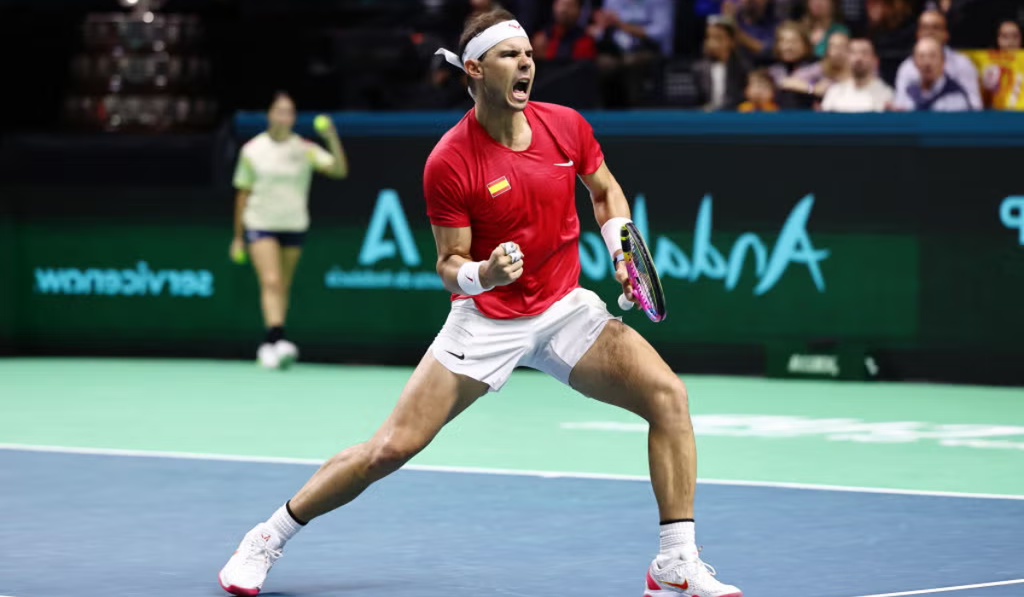
Rafael Nadal is no longer an active professional player in 2026, following his retirement at the end of the 2024 season. His current public profile is therefore centered more on his legacy, academy, foundation, family, and involvement with tennis-related projects than on tournament results. The records established during his playing career remain important reference points for modern tennis. His 22 Grand Slam titles and 14 Roland Garros championships continue to define his competitive résumé. As the sport moves into a new generation, his career remains a major benchmark for evaluating achievement, longevity, and clay-court excellence.
Conclusion
Nadal finished professional tennis after more than two decades at the highest level. Rafael Nadal career included 22 Grand Slam singles titles, 92 tour-level titles, two Olympic gold medals, 209 weeks as world No. 1, and a record 14 Roland Garros championships. His influence now continues through tennis development, philanthropy, and the institutions connected with his name. For readers seeking a broader reference, the Wikipedia article and related tennis resources can provide additional background, career timelines, and tournament information.
FAQs
- How many Grand Slam titles did Nadal win? – • He won 22 men’s singles Grand Slam titles.
- How many French Open titles did Nadal win? – • He won a record 14 Roland Garros titles.
- When did Nadal retire? – • He ended his professional career after the 2024 Davis Cup Finals.
- How many Olympic gold medals did Nadal win? – • He won two, in 2008 singles and 2016 doubles.
- Was Nadal world No. 1? – • Yes, he spent 209 weeks at the top of the ATP rankings.
Wikipedia / Related Link
For additional background, see Wikipedia’s Rafael Nadal page and the ATP Tour player profile for career statistics, tournament history, and records.